
Akademie für Altersforschung
  • About us
  • Team
  • Research
  • Teaching
  • Publications
  • Deutsch
  • English
  • Menu Menu

Embodied Perceptions – Diversity-sensitive representation and visualisation of body data

Currently, there are only limited options for visualising symptoms such as pain. These symptoms are described in practice or recorded using scales, which makes them less tangible. If pain is visualised at all, it is typically done by drawing on male body representations. This can lead to incomplete depictions of health conditions.

The goal of the project is to design a documentation system in which those affected can record their subjective symptoms on a gender- and diversity-sensitive 3D model in the form of customisable avatars. Through intelligent data visualisations over time, these can be better communicated, illnesses diagnosed, and the effects of treatments understood.

At the heart of Embodied Perceptions is the question of how pain and other subjective symptoms (such as cramps, injuries, etc.) can be digitally visualised to ensure the following aspects:

  • A gender- and diversity-sensitive form of representation in which those affected can recognise themselves
  • Visualisation of different symptoms and types of pain, especially chronic pain
  • Visualisation of temporal progressions or differences (e.g., before and after taking medication, by season/time of day)
  • Possibility for documentation that supports both those affected and healthcare professionals
  • Acceptance and understanding for people with chronic pain and other subjective symptoms

Project partners: AIT Austrian Institute of Technology GmbH (Projektlead), EURAG Österreich – Verein der Freunde des Bundes für die ältere Generation Europas, RISC Software GmbH, SYNYO GmbH

Duration: September 2024 – February 2027
Funds: FFG – Humanpotenzial, Humanpotenzial, FEMtech Forschungsprojekte 2023

The FFG is the central national funding organization and strengthens Austria’s innovative power. This project is funded by the FFG. www.ffg.at
       

https://altersforschung.ac.at/wp-content/uploads/2025/03/EmbodiedBildWebsite.jpg 204 472 https://altersforschung.ac.at/wp-content/uploads/2016/08/logo.jpg Redaktion2025-03-31 16:31:392025-04-07 12:47:43Embodied Perceptions – Diversity-sensitive representation and visualisation of body data
KliMateBild

KliMate – Conveying climate and health literacy by promoting active mobility and physical activity

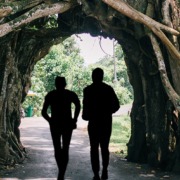
The KliMate project’s aim is to promote the health, social participation and general climate adaptation of older people by means of individually tailored recommendations and social mediation formats for active mobility and physical activity. To this end, a participatory approach is being developed for promoting physical activity by means of an individual approach as well as a group-based format (café and storytelling sessions) for teaching climate and health skills that contribute to climate-friendly physical activity promotion. By increasing active mobility and social participation, the aim is to counteract the psychological and physical consequences of climate change (anxiety, depression, loss of sleep, cognitive decline, deterioration in cardiovascular health).

The positive potential of KliMate for older people lies in promoting health by increasing health literacy and active mobility through personalised exercise recommendations.

This also includes health protection, especially in relation to heat, other extreme weather events and pollen.

KliMate also contributes to the empowerment and self-empowerment of older people by promoting climate, health and digital skills.


Project partners: AIT Austrian Institute of Technology GmbH (Projektlead), GeoSphere Austria – Bundesanstalt für Geologie, Geophysik, Klimatologie und Meteorologie, Karl Landsteiner-Gesellschaft – Verein zur Förderung der medizinisch-wissenschaftlichen Forschung, NOUS Wissensmanagement GmbH, Studio Dankl, Universität für Bodenkultur Wien

Duration: January 2024 – June 2026
Funds: FFG – Digitale Lösungen für Mensch und Gesellschaft 2022-2: Klimawandel & Gesundheit

The FFG is the central national funding organization and strengthens Austria’s innovative power. This project is funded by the FFG. www.ffg.at
       

https://altersforschung.ac.at/wp-content/uploads/2024/03/AAFWebsiteBild2.jpg 502 867 https://altersforschung.ac.at/wp-content/uploads/2016/08/logo.jpg Redaktion2024-03-05 11:05:192024-03-05 11:05:19KliMate – Conveying climate and health literacy by promoting active mobility and physical activity
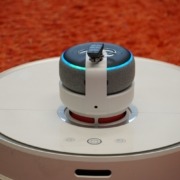
Smart Companion Roboter

Smart Companion 2 – everyday devices as useful helpers and assistance systems in emergency situations

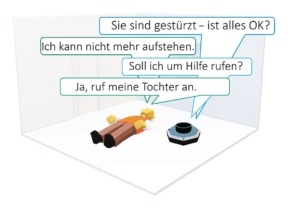
Based on the findings of the previous project, we are creating a prototype and testing whether it can meet the expectations in a test environment. Particular attention is being paid to the key components of fall detection and systems that can independently call for help. These include:

  • active emergency calls (i.e., the user calls for help),
  • appropriate device responses to unusual situations (i.e., the user does not respond and the device independently detects the emergency), and
  • fall prevention functions (i.e., the user is warned of potential obstacles).

In developing the system, we focus our research on the needs of future users, implement voice interaction systems as they are the most inclusive way of communication, use machine learning for emergency detection, and emphasize privacy, user-friendliness, and comfort in operating the assistance system.


Project Partners: Fachhochschule St. Pölten GmbH (Projektlead), Robert Bosch AG, Arbeiter-Samariter-Bund Gruppe Linz

Project Website: https://research.fhstp.ac.at/projekte/smart-companion-2
Duration: March 2022 – February 2025
Funds: FFG – IKT der Zukunft


https://altersforschung.ac.at/wp-content/uploads/2023/01/scroboter.jpg 1000 1500 https://altersforschung.ac.at/wp-content/uploads/2016/08/logo.jpg Redaktion2023-05-12 14:57:032023-10-30 14:52:41Smart Companion 2 – everyday devices as useful helpers and assistance systems in emergency situations

Linked Care – continuous information supply in mobile care and support

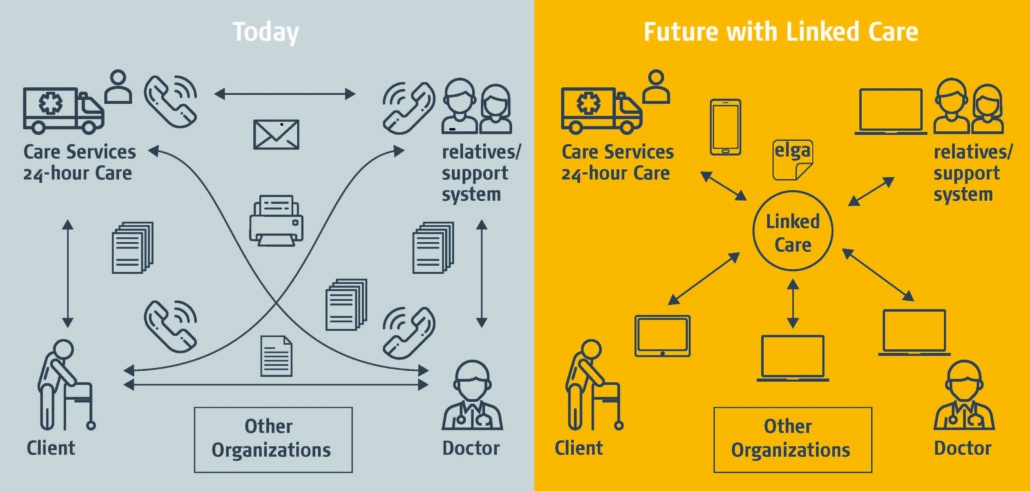
Linking and connecting, Linked Care is intended as a comprehensive digital system to ensure a stringent flow of information and a continuous supply of information in mobile care, assistance and therapy.

The demographic development causes a strongly growing need for care, assistance and therapy with a simultaneously decreasing supply of health professionals. This results in a high workload and, in addition, often different settings such as inpatient, day-care, mobile or private care, nursing and therapy intertwine. The exchange of information is often incomplete or requires a lot of additional time. The reason for this is the lack of interfaces and standards in IT systems and communication. The great differences in the type and scope of documentation cause additional work, because data must be recorded x times.

Projekt Partners: FH Campus Wien (Project Lead), Fachhochschule Technikum Wien, Universität Wien, myneva Austria GmbH, LOIDL Consulting & IT Services GmbH, Compugroup Medical CGM, Österreichische Apotheker-Verlagsgesellschaft m.b.H., Steszgal Informationstechnologie GmbH, Johanniter Österreich Ausbildung und Forschung gem. GmbH, Wiener Rotes Kreuz- Rettungs-, Krankentransport-, Pflege- und Betreuungsgesellschaft m.b.H., Volkshilfe Gesundheits- und Soziale Dienste GmbH (GSD GmbH), Volkshilfe Wien gemeinnützige Betriebs-GmbH

Project Website:

Linked Care Logo

Duration: April 2021 – March2025
Call: FFG – benefit Demografischer Wandel Pflege Challenge

https://altersforschung.ac.at/wp-content/uploads/2022/03/linked_care_logo_200px.png 200 409 https://altersforschung.ac.at/wp-content/uploads/2016/08/logo.jpg Redaktion2022-03-23 14:34:222023-10-30 14:53:38Linked Care – continuous information supply in mobile care and support
Search Search

Recent Posts

  • Embodied Perceptions – Diversity-sensitive representation and visualisation of body data
  • KliMate – Conveying climate and health literacy by promoting active mobility and physical activity
  • Digibox – communication platform to support nursing and care
  • Smart Companion 2 – everyday devices as useful helpers and assistance systems in emergency situations
  • Linked Care – continuous information supply in mobile care and support

Recent Comments

    Archives

    • March 2025
    • March 2024
    • May 2023
    • March 2022
    • September 2020

    Categories

    • completed
    • ongoing
    • Research

    Meta

    • Log in
    • Entries feed
    • Comments feed
    • WordPress.org

    Imprint

    Data Protection

    Contact

    Scroll to top Scroll to top Scroll to top