Research
The research activities of the Academy of Ageing Research cluster into three overlapping areas:
Healthy Ageing
Healthy Ageing
The Academy of Ageing Research is concerned with how people age healthily to maintain a high quality of life, independence, and self-determination for as long as possible. It is important to note that healthy ageing concerns people of all ages, and that even very old people, possibly with chronic diseases, can still gain a lot in terms of health. People with severe disabilities also have a right to healthy ageing.
Research questions that the Academy of Ageing Research deals with include:
- How can technologies and digitalisation contribute to greater independence and self-determination?
- What role does a health-relevant lifestyle play, including physical training, nutrition, and social participation?
- What is the potential impact of climate change on the quality of life of older people and what can be done about it?
- How can care structures be optimised to not only compensate for deficits, but also to maintain and increase the health of both clients and caregivers?
Systematic learning from practice
Systematic learning from practice
The Academy of Ageing Research is concerned with how the system of health and nursing care can be ensured and optimized. In doing so, it makes use of routine data and registers from the care system itself.
Research questions that the Academy of Ageing Research deals with include:
- Which measures from routine care can be used as indicators for the quality of care and what are their quality criteria?
- How can the need for action to improve the health of people in need of care be derived from routine data?
- How can the health, nursing and integrative care needs of the population be ascertained from nationwide registry data?
- What interventions set actually improve care and increase independence and health, and how do these outcomes manifest in routine data?
- How can the perspective of those receiving care, their relatives, and caregivers be systematically collected and what are the consequences?
Healthy work
Healthy work
The Academy of Ageing Research is concerned with how the situation of care and nursing staff can be improved and their health promoted.
- How can digitalisation and mechanisation contribute to making the everyday life of bereaved and caring persons easier?
- What is the effectiveness and efficiency of workplace health promotion measures?
- How can the perspective of caregivers and carers be systematically collected and what are the consequences?
- How can the transfer of knowledge be optimised, which didactic measures have which effectiveness and how can the quality of care be increased as a result?
Advisory Committee for Ethical Issues in Scientific Studies
The Advisory Committee for Ethical Issues in Scientific Studies at the Haus der Barmherzigkeit meets several times a year to discuss and provide guidance on new, ongoing, and completed research projects. The committee is composed of nationally and internationally renowned experts in nursing and medicine with strong scientific backgrounds. Research projects are reviewed with regard to ethical considerations, feasibility, scientific relevance, and methodology. Recommendations are made to ensure the quality, integrity, and practical feasibility of the research.
Members of the Advisory Committee are: Univ.-Prof. Dr. Eduard Auff, Brigitte Lagler, MSc, Univ.-Prof. Dr. Anton Luger,
Mag. Monika Wild MSc, Univ.-Prof. Dr. Herbert Watzke.



Ongoing projects
Completed projects

Digibox – communication platform to support nursing and care
The aim of the research project is to facilitate the everyday working life of caregivers through tailored digitization. For this purpose, the communication platform “AmigoBox” of the association OSSI Austria – Open Source for Social Inclusion Austria, which has already been tested with elderly persons, is used as a starting point. The innovative interaction concept […]
Keep it Simple – minimize information deficit, gain time and security
The aim of the project is to design a mobile eLearning platform on which all information and training measures that a care facility needs are available
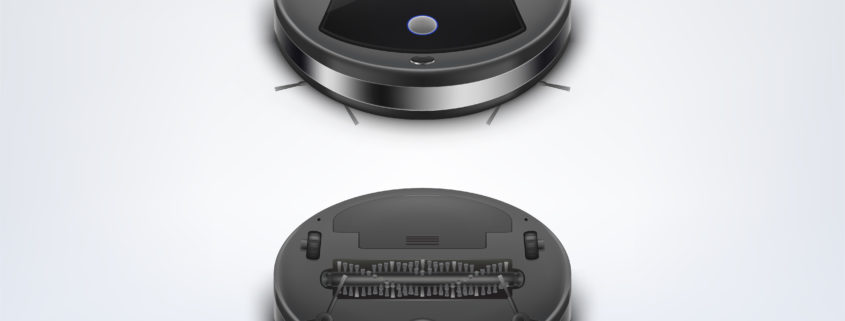
Smart Companion – use of everyday low-cost robotic sensing in conjunction with smart speech recognition methods for assistance services for the elderly.
Smart Companion combines autonomous low-cost robot sensors (vacuum cleaner robots) with smart voice interaction for assistance systems

ReMIND – Robotic ePartner for Multitarget INnovative activation of people with Dementia
ReMIND has designed a solution that touches upon aspects like tailored care, taking the social environment into account, focus on personhood and social connectedness using a robot.

Virtual Trip – development of an application for virtual reality excursions of elderly people in need of care people for therapeutic purposes
This project aimed to develop an application for virtual reality trips of elderly people in need of care for therapeutic purposes.
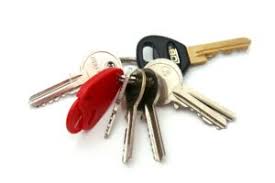
Way-Key – mobility assistant for people with dementia
The aim was to develop a safe and motivating tool for the promotion of healthy mobility for people affected by dementia.
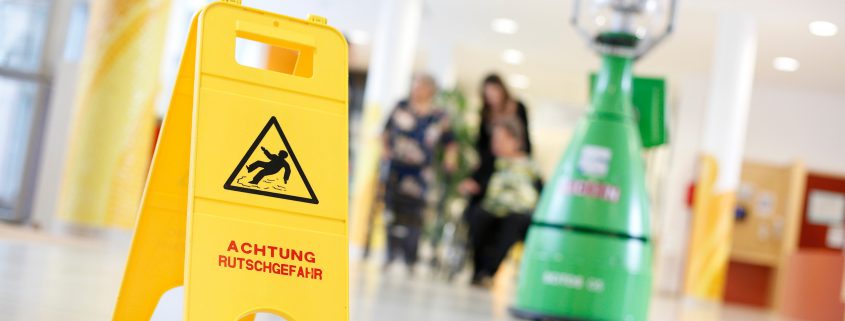
STRANDS – Spatio-Temporal Representations and Activities For Cognitive Control in Long-Term Scenarios
The Academy for Research on Aging was a partner in the EU-funded research project STRANDS. In this project, we aimed to develop a long-term autonomous robot together with eight international partners.
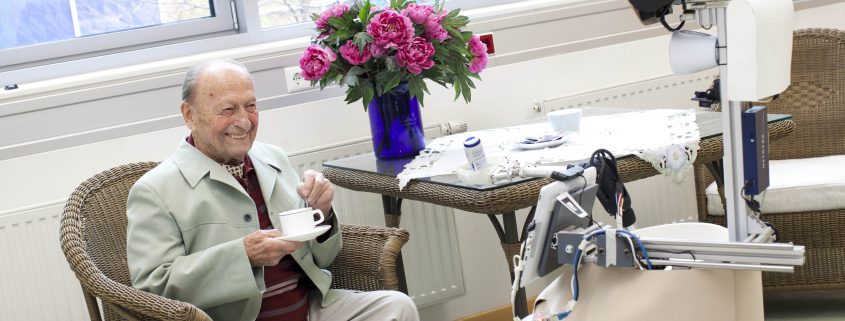
HOBBIT – The Mutual Care Robot
In this project, we were involved in the development of a robot for seniors who live on their own and are at risk of falling.

Playful cognitive training for cyclists
Since older cyclists are often involved in traffic accidents, the aim of this project was to investigate the effect of computer training on the multitasking ability and thus road safety of senior citizens.

Embodied Perceptions – Diversity-sensitive representation and visualisation of body data
Currently, there are only limited options for visualising symptoms such as pain. These symptoms are described in practice or recorded using scales, which makes them less tangible. If pain is visualised at all, it is typically done by drawing on male body representations. This can lead to incomplete depictions of health conditions. The goal of […]
KliMate – Conveying climate and health literacy by promoting active mobility and physical activity
The KliMate project’s aim is to promote the health, social participation and general climate adaptation of older people by means of individually tailored recommendations and social mediation formats for active mobility and physical activity. To this end, a participatory approach is being developed for promoting physical activity by means of an individual approach as well […]
Smart Companion 2 – everyday devices as useful helpers and assistance systems in emergency situations
Based on the findings of the previous project, we are creating a prototype and testing whether it can meet the expectations in a test environment. Particular attention is being paid to the key components of fall detection and systems that can independently call for help. These include: active emergency calls (i.e., the user calls for […]
Linked Care – continuous information supply in mobile care and support
Linking and connecting, Linked Care is intended as a comprehensive digital system to ensure a stringent flow of information and a continuous supply of information in mobile care, assistance and therapy. The demographic development causes a strongly growing need for care, assistance and therapy with a simultaneously decreasing supply of health professionals. This results in […]